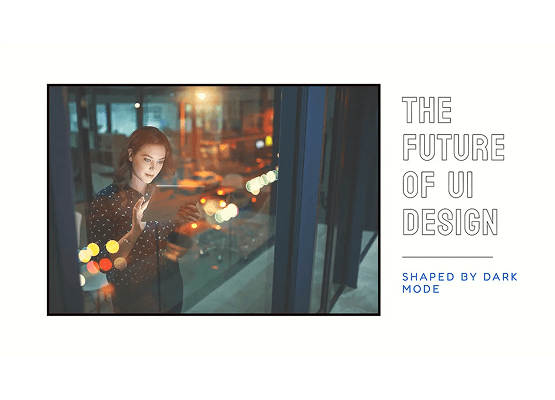
Dark mode has been one of the most significant design trends in recent years, making a great impact on user interfaces throughout different platforms, such as mobile apps (iOS & Android), web and desktop applications. Practically, it has allowed users to use dark interfaces instead of the light themes that are so common. While we have seen a lot of dark mode designs, designers are finding unique solutions to get this task right and make it the best possible user experience
Being Visually Appealing and Comfortable To See
Dark mode nature and appreciation of beauty — Arguably the most significant reason people like dark mode. It makes content pop against a dark background giving it a classy, modern appeal. Light text on dark background can be a very bold look which appeals to many users. It also reduces stress on the eyes for users by making screens less bright and thus blue-light free, which is typically a good thing at night time or in low light conditions. As a result, dark mode is especially sought after for night-time browsing because with it users can consume content at low light which has no blinding brightness.
Reduced Eye Fatigue and Saving Battery
Dark mode can help reduce eye strain, especially when in dark environments. Limiting the amount of bright light coming from screens can help a user view for those people who have to be on their devices for extended hours. This reduction of glare is quite helpful at night time or in a dimly lit environment.
Besides, on devices dark mode can promote better battery efficiency also. Since these screens are able to turn off individual pixels when pure black is displayed, it consumes less power compared to light mode, in which all pixels continue working. This energy-saving aspect is particularly appealing to mobile users sensitive to battery life.
Problem Statement and Challenges faced with the Design
Dark mode comes with many advantages, but it can be something difficult to crack in case a user of your software has capture. A major difficulty is keep a dark-themed interface readable and usable. That means designers should balance text and UI elements so that these can be read without excessive eye strain. It requires paying attention to contrast ratios, choosing colors, or using shadows and highlights to determine active and inactive areas.
Besides this, there’s the matter of consistency across both light and dark mode. Designers are by default supposed to work towards logical experiences irrespective of the mode chosen by the user. This mostly includes designing two variants of the same interface and testing them to offer similar experiences in terms of providing similar user experience without necessarily compromising functionality or visual appeal.
Customization and User Control
With the trend of setting dark mode, users increasingly require switching between light and dark themes according to their preference or environmental conditions. And providing users with easy controls to toggle between modes is one of the main key imperatives in modern UI design. Some platforms even offer automatic switching based on the time of day or ambient light, further enhancing user experience.
In the future, the trend of dark mode will be toward more advanced feature developments that implement different individual needs of end users. Designers will use dynamic dark modes based on content and allow further more granular customizations for users to personalize their experience of dark modes.
In other words, dark mode is not a hype; it’s a dramatic turn of users toward the very notion of attitude to digital interfaces. This balance of appearance and usability involves overcoming the unique problems that dark mode may present. Designers can provide dark mode experiences that are visually appealing and user-friendly by balancing the visually and functional aspects while addressing special challenges. It will continue to be one of the most important considerations for modern UI/UX design as dark mode evolves.